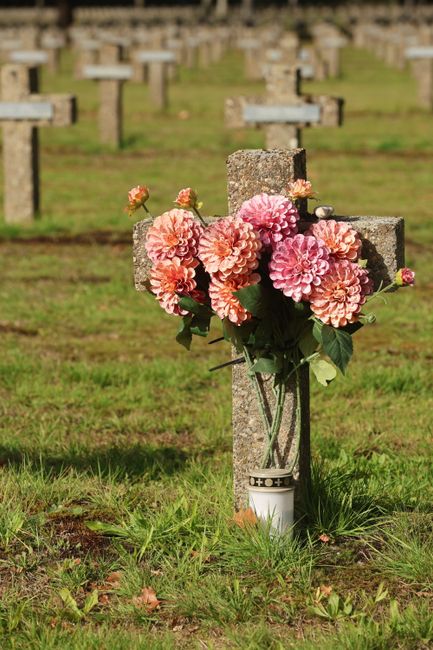
Twickenham council rules for placing flowers on public land
Posted on 21/10/2026
Twickenham council rules for placing flowers on public land: what you need to know before you leave a tribute
If you are thinking about leaving flowers on a verge, roadside, park edge, memorial spot, or another patch of shared space, the details matter more than most people expect. Twickenham council rules for placing flowers on public land are not usually about making life difficult; they are about safety, access, tidiness, and respecting how public spaces are managed. That said, the line between a thoughtful tribute and an item that becomes a hazard can be surprisingly thin. This guide walks you through the practical side of it all, in plain English, so you can make the right call with less stress and fewer surprises.
Whether you are marking a bereavement, a moment of remembrance, a celebration, or simply want to brighten a local place, you will find the key considerations here: where flowers may be acceptable, when permission may be needed, what councils and land managers tend to worry about, and how to leave something respectful without causing a problem later. Let's face it, nobody wants a heartfelt gesture to be removed within hours because it was placed in the wrong spot.
Table of Contents
- Why Twickenham council rules for placing flowers on public land Matters
- How Twickenham council rules for placing flowers on public land Works
- Key Benefits and Practical Advantages
- Who This Is For and When It Makes Sense
- Step-by-Step Guidance
- Expert Tips for Better Results
- Common Mistakes to Avoid
- Tools, Resources and Recommendations
- Law, Compliance, Standards, or Best Practice
- Options, Methods, or Comparison Table
- Case Study or Real-World Example
- Practical Checklist
- Conclusion
- Frequently Asked Questions
Why Twickenham council rules for placing flowers on public land Matters
Public land is shared space. That simple fact shapes almost every rule around flowers, tributes, and temporary memorials. A bouquet placed in the wrong location can block a footpath, distract drivers, interfere with maintenance, or create litter when it starts to wilt. In a busy place like Twickenham, with its mix of residential streets, river paths, shopping routes, parks, and traffic-heavy roads, even a small arrangement can have an outsized impact if it is left carelessly.
The real issue is balance. On one side, there is the human need to mark a moment properly. On the other, there is the duty to keep public spaces usable, safe, and clean. That is why councils and land managers usually focus on practical things: does it create a hazard, is it attached to something that belongs to someone else, will it obstruct sweeping or mowing, and how long will it stay there?
There is also the emotional side, which people sometimes overlook. If flowers are placed thoughtfully, in line with local expectations, they are more likely to remain in place long enough to do their job. And that matters. A small bunch on a rail or by a memorial can mean a great deal to a family or a community, especially in the first few days after a loss. In our experience, the most successful tributes are the ones that feel deliberate rather than improvised.
Expert summary: the safest approach is to treat public land as a managed space, not a blank canvas. If your flowers could block access, damage property, or be mistaken for abandoned litter, they need extra care or prior permission.
How Twickenham council rules for placing flowers on public land Works
There is not usually one single "flower rule" that covers every square metre of public land. Instead, the rules tend to come from a mix of council policies, land ownership, local byelaws, road safety expectations, and common-sense maintenance practice. That sounds a bit messy, and to be fair, it often is. A patch of grass might be managed by the council, a housing provider, Transport for London, a landowner, or a local trust, depending on the exact spot.
What that means in practice is this: before placing flowers, you should identify who controls the land and what kind of space it is. A memorial near a pavement is treated differently from flowers on a roundabout verge. A bouquet placed neatly beside a bench is different from one tied to a lamp post. And anything near a carriageway needs much more caution because visibility and driver distraction come into play quickly.
Commonly, councils will allow very small, temporary tributes if they do not create a problem. But longer-term displays, anything fixed to public fixtures, or anything that could interfere with safety or maintenance may need permission or may be removed. If a tribute is left in an informal spot, it may also be cleared during routine cleaning or grass cutting. That is not a judgment on the sentiment. It is just how public land is managed.
If you are arranging flowers for a funeral or remembrance, it can help to think in terms of placement rather than permanence. For example, a loose bouquet tucked safely at the base of an approved memorial is very different from a large arrangement that spills onto a cycle lane. The difference is subtle in theory, but in real life it is the difference between "respectful" and "we need to move this now."
For people who need flowers quickly, services such as same-day flower delivery in Twickenham or local flower delivery can help you prepare a tribute without scrambling at the last minute. If timing is less urgent, the flower care guidance on the site is useful for making sure the arrangement still looks good when it reaches the spot.
Key Benefits and Practical Advantages
Following local expectations before placing flowers on public land might sound like a small thing, but the benefits are real. The most obvious one is that your tribute is more likely to stay where you intended. If you place it in a sensible, unobtrusive position, it is less likely to be removed by maintenance staff or passers-by. That alone saves a lot of frustration.
Another benefit is safety. A neat, well-positioned tribute is less likely to trip someone, snag a wheelchair, or create a hazard near a road edge. This is especially relevant near narrow pavements, steps, busy crossings, or places where people naturally slow down and gather.
There is also dignity. A carefully placed floral tribute tends to read as respectful. It communicates thoughtfulness. A rushed or oversized display, by contrast, can sometimes feel as though it was placed without considering the space itself. That may sound a little harsh, but it is true.
From a practical point of view, doing things the right way can also save money. Flowers that need replacing because they were removed, blown over, or damaged by weather become waste. If you are choosing an arrangement for public placement, you may want something sturdy and manageable rather than highly elaborate. A compact bouquet, spray, or posy often works better than something top-heavy.
For many readers, there is also peace of mind. You know you have done what you can to respect the space, the public, and the person or moment you are honouring. That quiet sense of "yes, this is appropriate" matters more than people admit.
Who This Is For and When It Makes Sense
This guidance is relevant if you are a local resident, a visitor, a relative, a friend, or someone arranging flowers for a ceremony, memorial, or personal tribute. It also helps if you are supporting a group event, school remembrance, community gathering, or workplace gesture. Really, if the flowers are going on land you do not own and do not control, this is for you.
The most common situations include:
- leaving flowers after a bereavement or accident
- placing a tribute near a memorial, bench, tree, or significant local spot
- marking a community occasion such as remembrance events
- supporting a funeral procession or memorial gathering
- sending a small floral gesture to a place rather than a private home
It makes sense to be more careful when the flowers are meant to stay for more than a day or two, when the site is busy, or when the arrangement is larger than a small hand-held tribute. It also makes sense to be cautious if the location is on a road verge, near railings, close to traffic, or on a patch of grass that is regularly cut.
If you are unsure, ask yourself one straightforward question: would a stranger looking at this spot understand that the flowers are there intentionally and safely? If the answer is no, you probably need a better location.
Step-by-Step Guidance
Here is a practical way to approach it without overthinking every detail. You do not need a planning degree for this. Just a bit of care and common sense.
- Identify the exact location. Be precise. "Near the station" is too vague. Is it a pavement edge, a memorial, a tree base, a fence, or a roadside verge?
- Check who manages the land. Council land, private land, transport land, and park land may all have different expectations.
- Look for existing memorials or floral spots. If other tributes are already present, that can be a sign the location is used informally for remembrance, but it does not automatically mean anything goes.
- Assess safety first. Make sure the flowers will not block access, obstruct pedestrians, or tempt people to step into a road.
- Choose an appropriate size. Smaller, neater arrangements are usually easier to leave respectfully on public land.
- Avoid attaching flowers to infrastructure unless permitted. Lamp posts, signs, barriers, and railings are not fair game by default.
- Leave contact details only if suitable. If the council or land manager might need to speak to someone, use a discreet card rather than anything that creates clutter.
- Plan for weather. Wind, rain, and foot traffic can shift flowers quickly. If the day is blustery, keep things low and secure.
- Check back later if needed. If the tribute is temporary, make sure you know whether you or someone else will collect it later.
- Remove it responsibly. Once flowers fade, take them away before they become litter or a maintenance issue.
A small practical point: if you are arranging flowers for a same-day need, keep the design simple. You can still make it beautiful. In fact, sometimes the simpler option looks more elegant, especially outdoors in natural light around late afternoon when the colours soften a little.
Expert Tips for Better Results
After handling enough local flower orders, you start to notice which tributes travel well and which ones struggle outdoors. A few tips make a real difference.
Pick stable forms. Posies, tied sprays, baskets, and low arrangements are usually easier to place neatly than loose stems or oversized displays. They sit better on the ground and are less likely to blow apart.
Use weather-aware flowers. Tougher blooms tend to cope better if the tribute will be outside. A delicate arrangement can still work, but only if the placement is sheltered. If you are unsure, ask for something compact and resilient.
Think about colour with the setting in mind. Strong reds, whites, purples, and mixed tones often read clearly from a short distance. If the location is shaded or busy, high-contrast colours can help the tribute stand out without shouting.
Keep packaging minimal. Excess wrapping can catch the wind and make the arrangement look more like a gift delivery than a tribute. Outdoors, less is usually better.
Match the tone to the occasion. A joyful bouquet for a celebration on public land should feel different from a sympathy tribute. That sounds obvious, but it is easy to forget when ordering in a hurry.
Use flower choice to support the message. If you are looking for a softer or more traditional feel, flowers like lilies, roses, chrysanthemums, and mixed sympathy-style designs are often chosen for memorial placements. For brighter moments, seasonal bouquets or mixed-colour designs can work nicely.
If you are selecting flowers online and want a local feel, browsing the range at Twickenham florist or the broader flower shops in Twickenham section can help you find something suitable without wandering through a hundred random options. We've all been there, clicking around for ages and somehow ending up looking at the wrong bouquet entirely.
Common Mistakes to Avoid
Most problems with public-land flower tributes are avoidable. The main mistakes are usually simple, and that is precisely why they happen so often.
- Placing flowers too close to the road. Traffic, spray, and visibility issues make this a poor choice.
- Blocking pavements or entrances. Even a lovely tribute can become a nuisance if people must step around it.
- Using a location without checking who manages it. This is the big one. Ownership matters.
- Attaching flowers to public fixtures. Signs, posts, fences, and barriers are often not suitable without permission.
- Leaving flowers for too long. Fresh today, messy tomorrow. That is how it goes outdoors.
- Choosing a fragile arrangement for an exposed spot. A breeze off the river can do more damage than you expect.
- Assuming "everyone does it" means it is allowed. It does not. Honestly, public land is not a free-for-all.
- Ignoring maintenance schedules. If grass cutting or cleaning is due, your tribute may not survive the week.
One very common mistake is overcomplicating the tribute. People sometimes think more flowers must mean more respect. Not necessarily. A clean, intentional arrangement often says more than an oversized display that overwhelms the space. Less noise, more meaning.
Tools, Resources and Recommendations
You do not need special equipment, but a few simple tools can help make the process easier and cleaner.
- Phone camera: take a quick photo of the location before and after, so you can remember exactly where the tribute was placed.
- Measuring eye: not a real tool, obviously, but a quick visual check to make sure the arrangement is not too large for the space.
- Weather check: a look at the forecast can save you from choosing a windy, rain-soaked delivery time.
- Ribbon or note card: if appropriate, this can make the tribute feel more personal without making it messy.
- Transport protection: if you are carrying flowers yourself, keep them upright and shaded until you arrive.
For product selection, the funeral flowers category, sympathy flowers, and tributes collection are practical places to start when you need something appropriate for remembrance or condolence. If you want a neat format that sits well outdoors, the baskets and posies page is especially useful. For people choosing a more classic memorial style, the wreaths and sprays options are worth a look.
Some readers also prefer to keep things simple with a dependable mixed arrangement, especially when time is tight. The florist choice options can be a sensible route if you want professional judgement to do the heavy lifting.
Law, Compliance, Standards, or Best Practice
Because this topic touches public space, safety, and local management, it is worth being careful with language. Different locations may be covered by different rules, and not every tribute falls under the same expectation. In many cases, the key practical principles are the same even when the written rulebook varies: do not obstruct, do not create danger, do not damage property, and do not leave items indefinitely.
That is the plain-English version. In practice, this means:
- public access must remain clear
- flowers should not create a trip or visibility hazard
- fixtures and structures should not be used without permission
- maintenance teams must still be able to do their work
- items left in public space may be removed if they become unsuitable
If you are dealing with a roadside location, extra care is sensible. Road-adjacent tributes can become dangerous very quickly if people stop unexpectedly or step into traffic. Likewise, memorials near steps, slopes, or cycle routes need a bit of extra thought. Safety before sentiment. That is the rule that rarely gets printed but always matters.
Best practice also includes keeping tributes proportionate and temporary unless a formal memorial arrangement exists. If you are not sure whether a location is approved for long-term flowers, treat it as short-term only until you confirm otherwise.
Options, Methods, or Comparison Table
If you are deciding how to place flowers on public land, this simple comparison can help. It is not about right or wrong so much as fit for purpose.
| Option | Best for | Main advantage | Main caution |
|---|---|---|---|
| Loose bouquet placed neatly on the ground | Very short-term tributes | Simple, quiet, easy to remove later | Can blow away or look untidy if left too long |
| Posy or basket arrangement | Memorials and sympathy gestures | Stable and easier to keep tidy | Still needs an appropriate spot |
| Spray or wreath | Formal remembrance or funeral-linked tributes | Looks intentional and respectful | May be too large for narrow public spaces |
| Flowers attached to railings or posts | Only where explicitly allowed | Visible and elevated | Often unsuitable without permission |
| Delivered floral tribute for private collection | When public placement is uncertain | Safer if the public space rules are unclear | Requires a recipient or planned handover |
For many people, the safest middle ground is a compact tribute that can be placed without interfering with access. If you need a more formal arrangement, it is often better to ask before assuming. That one phone call or message can save a lot of hassle later.
Case Study or Real-World Example
A common real-world situation goes something like this. A family wants to leave flowers near a riverside path in Twickenham after a funeral service. They have seen others leave tributes there before, so they assume it is fine to place a large bouquet near the main walkway. But the spot is narrow, it gets busy with joggers and cyclists, and the flowers risk being kicked over or pushed into the path.
The better approach is to choose a smaller, low arrangement and place it beside an existing memorial area or approved edge where it does not block movement. The tribute still feels personal. The flowers still do their job. And nobody has to dodge past them with a coffee in one hand and a dog lead in the other, which, in fairness, is how half of Twickenham seems to move on a Saturday morning.
In another example, someone ordering flowers for a remembrance event may think the most lavish arrangement will make the strongest statement. But outdoors, a tidy wreath or basket often has more presence than a sprawling display that keeps falling over. It stays put, reads clearly, and ages more gracefully as the day goes on.
The lesson is simple: public placement is not only about emotion. It is about fit, scale, and the reality of the space.
Practical Checklist
Before you place flowers on public land in Twickenham, run through this list. It takes thirty seconds and can save you a lot of trouble.
- Have I identified the exact location?
- Do I know who manages the land?
- Is this spot safe for pedestrians, cyclists, and drivers?
- Will the flowers block access or maintenance?
- Is the arrangement small and stable enough for the space?
- Am I avoiding attachment to public fixtures unless allowed?
- Will the flowers still look respectful after a day or two outdoors?
- Do I know when to collect or clear them if needed?
- Have I chosen the right style for the occasion?
- Would I be comfortable if someone else saw this placement as a public tribute, not just a personal gesture?
If the answer to any of those is uncertain, pause and rethink the placement. A little pause now is better than an awkward removal later.
Conclusion
Twickenham council rules for placing flowers on public land are really about making sure a kind gesture stays kind once it enters a shared space. That means thinking about safety, access, ownership, weather, timing, and the practical life of the flowers after they are laid down. It is not complicated, but it does reward a bit of care.
If you keep the tribute neat, temporary where needed, and suited to the exact location, you are far more likely to get the result you want: something respectful, visible, and appropriate. And that, truth be told, is what most people are aiming for anyway.
For help choosing a fitting arrangement, timing a delivery, or selecting flowers that suit the occasion, browse the local ranges and pick something that feels steady, thoughtful, and human. That is usually the sweet spot.
Get a free quote today and see how much you can save.
Sometimes the smallest bouquet, placed with care, says the most. Quietly, properly, and in the right place.
Frequently Asked Questions
Can I leave flowers anywhere on public land in Twickenham?
No, not safely or automatically. Public land is managed space, so the exact spot matters. A flower tribute may be fine in one place and unsuitable a few metres away if it blocks access, creates a hazard, or sits on land with different management rules.
Do I need permission to place flowers on a pavement or verge?
Sometimes, yes. It depends on the location, how long the flowers will stay there, and whether they interfere with public use. A small temporary tribute may be tolerated, but anything larger or more permanent may need approval.
What kind of flower tribute is best for public land?
Compact arrangements usually work best. Posies, baskets, sprays, and wreaths are often easier to place neatly than loose or oversized bouquets. The best option is the one that fits the space without blocking people or drawing unwanted attention for the wrong reasons.
Can I tie flowers to a lamp post or railing?
Not unless the land manager or council has allowed it. Public fixtures are not meant to be used as display points by default, and items tied there can become a maintenance issue or safety concern.
How long can flowers usually stay on public land?
There is no single time limit that applies everywhere. In many situations, short-term placement is more acceptable than long-term display. Once flowers begin to wilt or become untidy, they are more likely to be removed.
What happens if the flowers are removed?
They may have been cleared because of safety, maintenance, or cleanliness concerns. It is frustrating, yes, but it does not always mean the tribute was unwelcome. Often it simply means the site could no longer support it.
Are roadside flowers allowed in Twickenham?
Roadside tributes need extra care because of traffic risk. Even a small bouquet can become unsafe near a carriageway if people stop, step out, or create visual distraction. If the location is near live traffic, think twice and keep it very low-key.
What flowers are suitable for a memorial tribute outdoors?
Roses, lilies, chrysanthemums, and mixed sympathy flowers are commonly chosen for memorials. For outdoor placement, stability matters as much as appearance, so a sturdy design is usually better than a delicate one.
Can I leave flowers on council-maintained grass?
Possibly, but only if the placement does not interfere with mowing, maintenance, or public access. Council-maintained grass is often visited regularly by grounds teams, so anything left there may be moved or removed.
What should I do if I am not sure who manages the land?
If you are uncertain, treat the location cautiously and keep the tribute temporary and unobtrusive. In many cases, a smaller arrangement in a safer nearby spot is the better choice until you can confirm who is responsible.
Is a delivery service useful for public-land flower tributes?
Yes, especially if you want the flowers prepared neatly and delivered on time. Local delivery can help when the tribute needs to arrive fresh, but you still need to make sure the final placement is appropriate for the space.
What is the safest way to avoid problems?
Choose a small, stable arrangement; avoid blocking access; do not attach flowers to public fixtures without permission; and remove them when they fade. That simple approach prevents most issues before they start.